Blackwood Manor: A Gothic Text Adventure for the Zork Generation (and Their Kids)
Zork was one of the first games I ever played. No graphics, no soundtrack — just a blinking cursor and the promise that anything you could type, the game might understand. I was maybe ten. I got eaten by a grue more times than I’d like to admit.
My kids don’t play Zork. They play horror games — the kind with jump scares and atmospheric lighting and voice acting. But when I watch them play, I notice something: the scariest moments aren’t the loud ones. They’re the quiet ones. The door that’s slightly open. The sound that shouldn’t be there. The thing your brain fills in before the game shows you.
That’s what text does better than pixels ever will.
A Mansion That Won’t Let You Leave
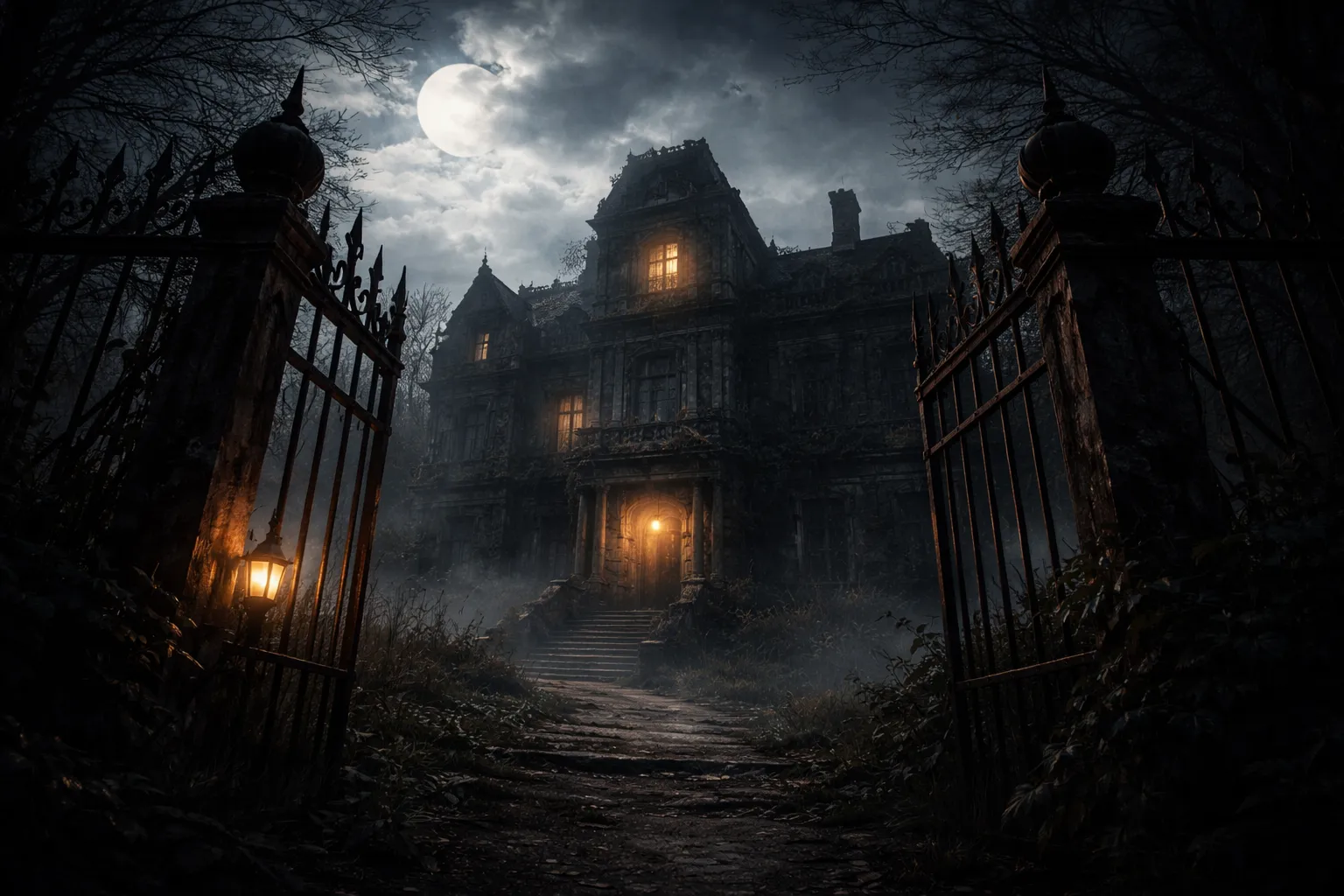
Blackwood Manor is a gothic text adventure you play free in your browser. You’re Alex Mercer, a paranormal investigator hired to find a missing will and lay a restless spirit to rest. Simple enough — until the front gate rusts shut behind you and the front door seals itself.
You’re not leaving until this is finished.
The manor is a Victorian estate with over twenty rooms spread across four floors — from the overgrown gardens to the family crypt beneath the foundation. Every room has something to find, something to read, someone to talk to. The ghosts aren’t all hostile. Some want to help. Some just want to dance.
And some of them are lying.
Your Imagination Is the Graphics Engine
There’s a reason horror works so well in text. When I write “something moves in the darkness,” your brain draws a monster that’s personally terrifying to you. No rendering engine can compete with that.
Blackwood Manor leans into this. The house has a madness system — spend too long in the dark without a light source, and the shadows start whispering. The descriptions shift. Your sanity score drops. And the things that live in the pitch-black basement corridors don’t care if you have a weapon. They care if you have iron.
Combat is turn-based and simple. Attack, defend, flee, or use an item. But not every fight can be won with a sword. Some ghosts need something else entirely — a lullaby, a mirror, a memory.
Easy to Finish, Hard to Master
You can escape Blackwood Manor in under five minutes if you’re desperate enough. Smash a window, scramble through the glass, run. You’ll survive. You won’t feel good about it.
Or you can stay. Talk to every ghost. Read every diary entry. Figure out the combination to the tower door. Piece together what actually happened to the Blackwood family in 1847 — and decide what to do about it.
There are multiple endings, and they aren’t just “good” and “bad.” Some are bittersweet. One is dark in a way that surprised even me when I was building it. The best endings reward players who pay attention — who read the torn page, who notice what the alphabet blocks spell backwards, who wonder why the altar in the basement is older than the house above it.
Most players will finish their first run and think they’ve seen the story. They haven’t. Not even close.
The Details Are the Game
Text adventures live or die on their writing, and I spent more time on the scenery descriptions than almost anything else. You can examine the fireplace in the parlor and find tally marks scratched into the firebox. You can read the guest journal and learn that a previous visitor never made it out. You can give a rose to a ghost and watch her expression change from sorrow to something like hope.
The NPCs remember what you’ve done. Talk to the gardener three times and he’ll tell you progressively more — about the family, the child, the things in the dark. Lady Blackwood’s ghost won’t even appear unless you’re carrying the right item. And the maid has been hiding something under her mattress for a very long time.
Every item has a purpose, sometimes more than one. The silver goblet is a ritual component — but only if you fill it first. The oil can fixes the music box — but only if you think to try. The hand mirror defeats the final boss in a single move — if you figure out why.
Track What You’ve Found
If you log into your EchoForge account, Blackwood Manor tracks your achievements across sessions. Endings you’ve discovered, secrets you’ve found, challenges you’ve completed — they all sync to your profile. It’s a good way to see how much of the game you’ve actually uncovered. (The answer, on your first playthrough, is probably less than half.)
Achievements persist across devices too. Play on your laptop, pick up on your phone. The manor remembers.
Play It Now
Blackwood Manor is free, runs in any browser, and doesn’t need a download. It takes about an hour to play through once — and considerably longer if you want to find everything.
I built it because I wanted my kids to feel what I felt playing Zork. That mix of curiosity and dread. The thrill of typing a command and having the game surprise you. The satisfaction of solving a puzzle nobody told you existed.
The cursor is blinking. The gate is shut. Type PLAY.
— Bruno